How Basement Waterproofing Helps Prevent Structural Damage


A dry basement does more than protect stored boxes and finished flooring. It protects the structure holding up the entire house. When water enters below grade, it rarely stays a cosmetic problem for long. It pushes against foundation walls, weakens concrete over time, rots framing, feeds mold, corrodes metal, and creates the kind of hidden deterioration that becomes expensive only after it becomes obvious.
Homeowners often think of Basement Waterproofing as a comfort upgrade, something you do after seeing a puddle near the water heater or a damp corner after a storm. In practice, it is a structural protection strategy. It addresses the conditions that allow water to build pressure around the foundation and move through materials that were never meant to stay saturated.
Anyone who has walked through older neighborhoods after a wet spring has seen the pattern. A few homes remain dry year after year because the grading, drainage, and waterproofing details are working together. A few others show subtle warning signs, a crack that has widened, a basement wall with a slight inward bow, efflorescence on masonry, a musty smell that never quite leaves. Structural damage rarely arrives all at once. More often, it develops by repetition, season after season, through wetting, drying, freezing, thawing, and pressure that never fully lets up.
Why water below grade is so hard on a house
Basements and crawl spaces sit in contact with the soil, which means they are constantly exposed to moisture. Even when there is no standing water, the surrounding earth can remain damp for long periods. During heavy rainfall or snowmelt, the soil becomes saturated and hydrostatic pressure builds against the foundation. That pressure is the force of water in the ground pressing toward any available opening.
Concrete is durable, but it is not magically waterproof. Poured concrete can crack. Concrete block has joints and hollow cores. Mortar can deteriorate. Pipe penetrations, cold joints, tie rod holes, and window wells all create opportunities for water intrusion. The first sign may be a hairline crack or a faint white mineral deposit on the wall. Left alone, those early signs can lead to chronic moisture conditions that affect the foundation and the framing above it.
One common misconception is that if the water dries on its own, no real harm has been done. That is not how building materials behave over time. Repeated moisture exposure changes them. Wood loses strength as decay advances. Steel rusts and expands. Concrete can spall. Adhesives fail. Flooring cups or delaminates. Insulation loses effectiveness. The issue is not simply whether you can mop up after a storm. The issue is whether the structure is being exposed to conditions that shorten its service life.
The connection between moisture and structural damage
The relationship between basement moisture and structural failure is direct, even if the damage develops slowly enough to escape notice for years.
When water accumulates around the foundation, three broad types of structural stress tend to follow. First, pressure from saturated soil pushes laterally on foundation walls. Second, moisture degrades the materials themselves, especially where organic framing meets masonry. Third, water movement can undermine the soil supporting footings and slabs.
A poured concrete wall can resist a lot of force, but when drainage is poor and pressure remains high, even a robust wall may crack or begin to displace inward. Block foundations are particularly vulnerable because the mortar joints create natural weak points, and the hollow cores can fill with water if the exterior drainage plane fails. I have seen block walls with only a modest bow at first, maybe less than an inch over several feet, that homeowners ignored because the movement seemed minor. A few wet years later, that same wall needed bracing and partial rebuilding.
The second route to damage is slower and easier to miss. A damp basement raises humidity throughout the lower part of the home. Rim joists, sill plates, and beam pockets become vulnerable to rot, especially in older homes where treated lumber was not used. Steel columns and fasteners corrode. In finished basements, the visible surfaces often hide the problem until a contractor opens the wall and finds blackened sheathing, softened studs, or rusted bottom track.
The third route is the one homeowners least expect. Water does not need to pour through the walls to cause settlement. If roof runoff is dumped near the foundation, or if exterior drainage is poorly managed, the soil can expand when wet and shrink when dry. Certain clay-heavy soils are notorious for this. That repeated movement changes how loads are transferred and can lead to differential settlement, slab cracks, and sticking doors or windows upstairs. The source seems far away from the symptom, but the chain of cause and effect often starts in the ground around the basement.
Hydrostatic pressure is the real enemy
Most people focus on the visible leak. Professionals focus on why the leak happened. In many cases, the real problem is pressure.
Hydrostatic pressure builds when water in the soil has nowhere to go. This happens after prolonged rain, spring thaw, irrigation overspray, or downspouts discharging too close to the home. Once the soil around the foundation becomes saturated, water presses against the wall and floor slab. It seeks out weakness. That weakness might be a crack you can see, or it might be a porous section of concrete, a cove joint where the wall meets the floor, or a failed seam in an older waterproofing membrane.
Pressure matters because it changes the job from simple sealing to complete water management. A basement wall that is merely damp from interior humidity may need ventilation and moisture control. A wall under active soil pressure needs drainage relief and exterior protection. Smearing sealant over the inside face without addressing the pressure behind it often leads to disappointment. The coating may hold briefly, then blister, peel, or allow water through somewhere else.
That is why quality Basement Waterproofing systems are designed to interrupt the water path and reduce the forces acting on the structure. They do not rely on one magic product. They combine drainage, membranes, grading, sump systems where needed, and attention to the smallest entry points.
How waterproofing protects foundation walls
The structural benefit of waterproofing starts outside. The goal is to keep bulk water from saturating the soil next to the foundation and to create a path for collected water to move away before pressure builds.
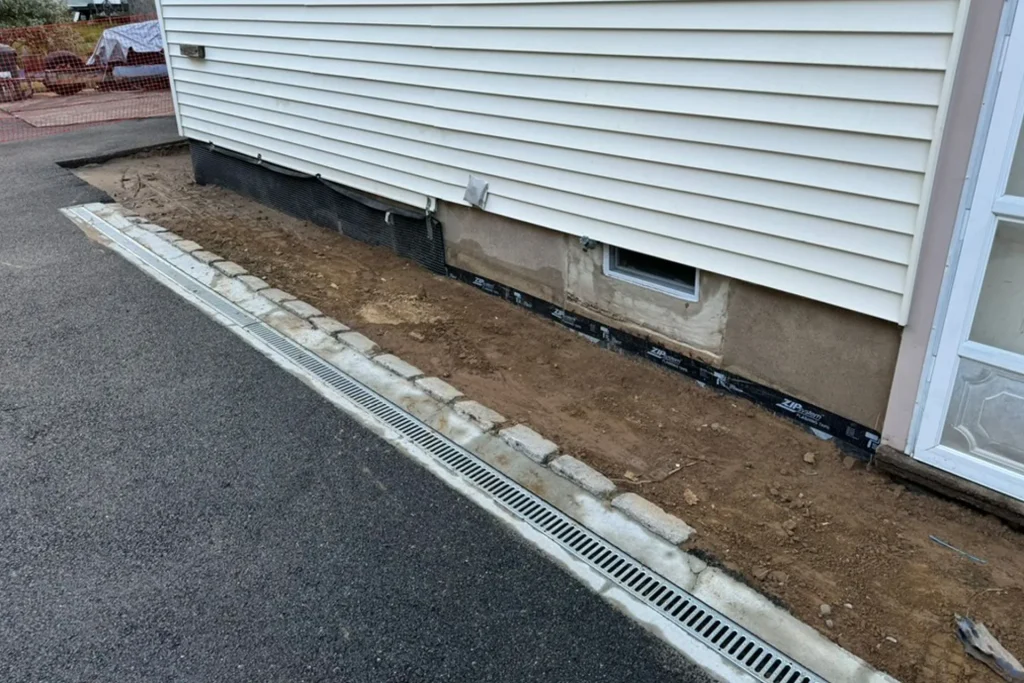
Exterior waterproofing typically involves excavation down to the footing, repair of cracks or voids, application of a waterproof membrane, installation of drainage board or protective matting, and placement of footing drains in clean stone. When done properly, this system prevents direct moisture penetration and relieves pressure at the base of the wall. It is one of the most effective ways to preserve a compromised or vulnerable foundation because it tackles the issue at its source.
That said, not every home needs full excavation. In some cases, water entry is driven primarily by poor surface drainage. Correcting grade, extending downspouts, reshaping landscape beds, and cleaning or replacing clogged footing drains can dramatically reduce basement moisture. The right approach depends on the symptom pattern, the foundation type, and the water behavior on the site.
Interior drainage systems also play an important role. They do not stop water from reaching the exterior side of the wall, but they can manage seepage at the perimeter and reduce pressure beneath the slab. For homes where exterior excavation is impractical, because of decks, porches, narrow lot lines, or finished hardscapes, a well-designed interior system with a sump pump can provide reliable protection. The structural value comes from controlling water before it can pond, rise, and repeatedly wet framing and finishes.
The danger of ignoring small cracks
A hairline crack in a basement wall is not automatically a structural emergency. Many cracks are non-structural shrinkage cracks, especially in poured concrete. But cracks are still data. They show where the wall moved, cured unevenly, or yielded under stress. If water is entering through them, that means the crack is not just cosmetic.
The important question is whether the crack is active, widening, offset, or associated with other warning signs such as bowing, floor heaving, stair-step cracking in masonry, or separation around windows and doors upstairs. Waterproofing repairs often begin with crack injection or sealing, but an experienced contractor should also ask what drove the crack in the first place. Fixing the opening without reducing exterior water load is like repainting over a stain without fixing the roof leak.
I once looked at a basement where a homeowner had sealed the same crack three times in five years. Each repair worked through one dry season, then failed after a wet winter. The wall itself was not severely damaged yet, but the pattern told the story. The downspouts terminated two feet from the house, the side yard sloped inward, and the gutter on that elevation regularly overflowed. Once those exterior conditions were corrected and the crack was properly injected, the wall stayed dry. The lesson was straightforward: cracks matter, but the water source matters more.
Waterproofing also protects the structure above the basement
Structural damage from basement moisture does not remain confined to concrete and masonry. Moisture migrates upward through evaporation and air movement. A damp lower level increases relative humidity in the whole house, especially in tightly built or poorly ventilated homes.
This affects the framing at the basement ceiling and the lower portions of walls https://www.google.com/maps?cid=15618896523686751270 on the first floor. Sill plates, joist ends, and subfloor edges are particularly at risk if there is chronic dampness or condensation. In older homes, I often see beam pockets where the embedded ends of wood joists have been exposed to masonry moisture for decades. The wood may look serviceable from below, but when tested with an awl it can be soft deep inside. That kind of hidden decay can compromise load-bearing capacity long before there is visible sagging.
Basement Waterproofing helps by lowering ambient moisture, limiting vapor migration, and reducing the wet-dry cycling that causes materials to fail prematurely. For homes with finished basements, this protection is even more important. Drywall, MDF trim, carpeting, laminate flooring, and fiberglass insulation all mask moisture damage until replacement is the only practical option. A dry basement is not only more usable, it preserves the hidden structural and finish components that would otherwise degrade quietly.
Signs that moisture is already affecting structural integrity
Homeowners often ask what they should watch for beyond obvious leaks. The answer is a combination of visual clues, smells, and subtle movement.
Here are five signs that deserve prompt attention:
- Horizontal or stair-step cracks that continue to grow, especially if walls appear to bow inward.
- White chalky residue, peeling paint, or damp staining that keeps returning after cleanup.
- Musty odors paired with soft wood, rusted columns, or corrosion on mechanical equipment.
- Uneven floors above the basement, doors that suddenly stick, or gaps opening at trim and drywall joints.
- Water collecting at the wall-floor joint, near support posts, or around basement windows after rain.
None of these automatically means severe structural failure, but each points to moisture conditions that can lead there. The earlier they are evaluated, the more repair options tend to be available.
Not all waterproofing methods offer the same protection
This is where judgment matters. The market is full of products that promise a dry basement, from interior paints marketed as waterproof barriers to quick crack fillers and dehumidifiers sold as complete solutions. Some have their place. None should be mistaken for a full structural moisture strategy when the underlying problem involves drainage or pressure.
A coating on the inside face of a wall may improve appearance and reduce minor dampness, but it cannot stop water from saturating the exterior side of the foundation. A dehumidifier helps manage indoor air moisture, which is useful, but it does not relieve hydrostatic pressure. A sump pump is excellent at moving collected water out of the home, yet it still needs a proper drainage system feeding it and a safe discharge point away from the foundation.
Good waterproofing work starts with diagnosis. Where is the water coming from? Does it enter only during wind-driven storms, or after every major rainfall? Is the issue surface runoff, a high water table, a failed footing drain, a cracked wall, window well overflow, or condensation from humid air meeting cool surfaces? The right answer often includes more than one cause.
In practice, the most durable systems usually blend methods. Exterior grading reduces runoff. Gutters and downspout extensions move roof water away. Foundation cracks are repaired. Perimeter drainage relieves pressure. Sump systems handle collected water. Vapor barriers and dehumidification address residual moisture. Each layer supports the others.
Soil conditions and climate make a difference
A house built on sandy, well-draining soil behaves differently from one built in dense clay. Homes in freeze-thaw climates face different stresses than homes in consistently warm, wet regions. That is why waterproofing should always be site-specific.
Clay soils hold water longer and expand significantly when wet. This expansion increases pressure against foundation walls and contributes to seasonal movement. In those areas, drainage details and grade control are especially important. Sandy soils drain more freely, but they can still allow large volumes of water to move quickly toward the foundation if the site slopes the wrong way.
Cold climates add another complication. Water that enters cracks or pores can freeze, expand, and enlarge the defect over time. Freeze-thaw cycling is hard on masonry and concrete, particularly when materials were already weakened by age or chronic saturation. A small moisture problem in autumn can become a structural repair issue after a few winters.
High water table regions create a different challenge. Even with proper grading, groundwater may rise to the level of the footing during wet seasons. In those homes, sump systems and under-slab drainage are often essential. There is no one-size-fits-all prescription, which is one reason experienced assessment matters so much.
What effective prevention usually looks like
Preventing structural damage is often less dramatic than repairing it. It usually involves improving several ordinary details before they become extraordinary expenses.
A practical waterproofing plan often includes:
- Keeping roof runoff under control with clean gutters and downspouts that discharge well away from the foundation.
- Correcting negative grading so surface water sheds away from the house rather than pooling near basement walls.
- Repairing foundation cracks and vulnerable penetrations before repeated wetting enlarges them.
- Installing or restoring perimeter drainage and sump systems where site conditions demand them.
- Managing interior humidity with ventilation or dehumidification so materials can stay dry between weather events.
These steps may sound basic, but the houses that avoid major structural issues are usually the ones where the basics were handled early and maintained consistently.
The cost of prevention versus the cost of repair
Homeowners naturally focus on price when discussing Basement Waterproofing. That is reasonable. Waterproofing can range from relatively modest drainage corrections to major excavation work. But the comparison that matters is not waterproofing cost versus doing nothing. It is waterproofing cost versus structural repair after years of moisture exposure.
A failed basement wall, widespread sill rot, mold remediation behind finished walls, or slab stabilization can cost far more than early intervention. Even where the structure remains sound, water damage often triggers a chain of secondary losses. Flooring, drywall, cabinetry, insulation, stored belongings, electrical components, and HVAC equipment may all be affected. Insurance coverage is often limited when the issue is tied to deferred maintenance or groundwater intrusion.
There is also the resale factor. Buyers and inspectors notice basement moisture immediately. Efflorescence, staining, musty odors, and visible crack repairs raise questions that can slow a sale or invite price reductions. A documented waterproofing system installed for the right reasons is far easier to explain than recurring moisture problems with no clear solution.
When to call for a professional evaluation
Some warning signs justify prompt expert review. If a wall is bowing, if cracks are widening, if water enters regularly, or if floors above feel uneven, it is wise to get the foundation assessed. The same applies if a basement has persistent dampness despite running a dehumidifier or if moisture returns every spring.
A strong evaluation should include more than a quick estimate. It should consider grading, roof drainage, foundation type, crack patterns, drainage history, and whether the symptoms point to structural movement or mainly water management issues. In more serious cases, a structural engineer may be the right first call, especially where wall displacement or settlement is evident. Waterproofing contractors and engineers often approach the problem from different angles, and sometimes both perspectives are useful.
What matters most is honest diagnosis. The best solution is not always the biggest one, and it is not always the cheapest one either. It is the one that addresses the actual path of water and the actual risk to the structure.
A dry basement is really a stable foundation
People sometimes talk about basement leaks as if they are separate from the house itself, an isolated nuisance in the lower level. Structurally, that view does not hold up. The basement is part of the support system. When water is allowed to saturate the soil around it, enter through it, and linger within it, the foundation carries stress it was never meant to carry indefinitely.
Basement Waterproofing helps prevent structural damage because it reduces the forces, moisture exposure, and material breakdown that turn small defects into major failures. It keeps foundation walls from fighting unnecessary pressure. It helps protect framing from rot and corrosion. It limits settlement risks tied to poor drainage. It preserves not just the basement, but the strength and durability of the house above it.
A house does not need a dramatic flood to suffer water-related structural damage. More often, the problem starts with a downspout ending too close to the wall, a grade that settled over time, a crack that seemed harmless, or a damp smell that became part of the background. The homes that age well are usually the ones where those small warnings were taken seriously, and where moisture control was treated as structural maintenance, not just cleanup.
ARD Waterproofing
98 Smull Ave, West Caldwell, NJ 07006, United States
+1 917-691-8411
FAQ About Basement Waterproofing
Can you 100% Waterproof a Basement in West Caldwell?
A properly designed system can substantially reduce basement water intrusion, but no method can promise protection against every flood, equipment failure, or future change in site conditions. The first step is identifying whether moisture comes from surface runoff, groundwater, plumbing, or condensation. Solutions may include grading and gutter improvements, drainage, foundation repairs, and a sump system. Review the specific coverage and exclusions of any written warranty.
How much does it cost to professionally waterproof a basement in NJ?
There is no single price that fits every basement. Cost depends on the cause of the leak, the area needing work, access, excavation requirements, drainage design, sump equipment, and restoration of disturbed finishes or landscaping. Request an on-site assessment and an itemized written estimate that explains the scope, exclusions, and maintenance requirements before comparing proposals.
How long does foundation waterproofing last in West Caldwell, NJ?
Service life varies with the waterproofing materials, installation quality, soil and water conditions, and maintenance. Drainage components and pumps may require servicing or replacement even when other parts of the system remain functional. Keep gutters, drainage outlets, and sump equipment maintained, and have recurring leaks or changes in foundation condition assessed. Ask for product-specific expectations and written warranty terms rather than relying on one lifespan for the entire system.